✈️ Survivorship Bias in Trading: Lessons from World War II
Not every loss is feedback, and excessive analysis can do more harm than good.
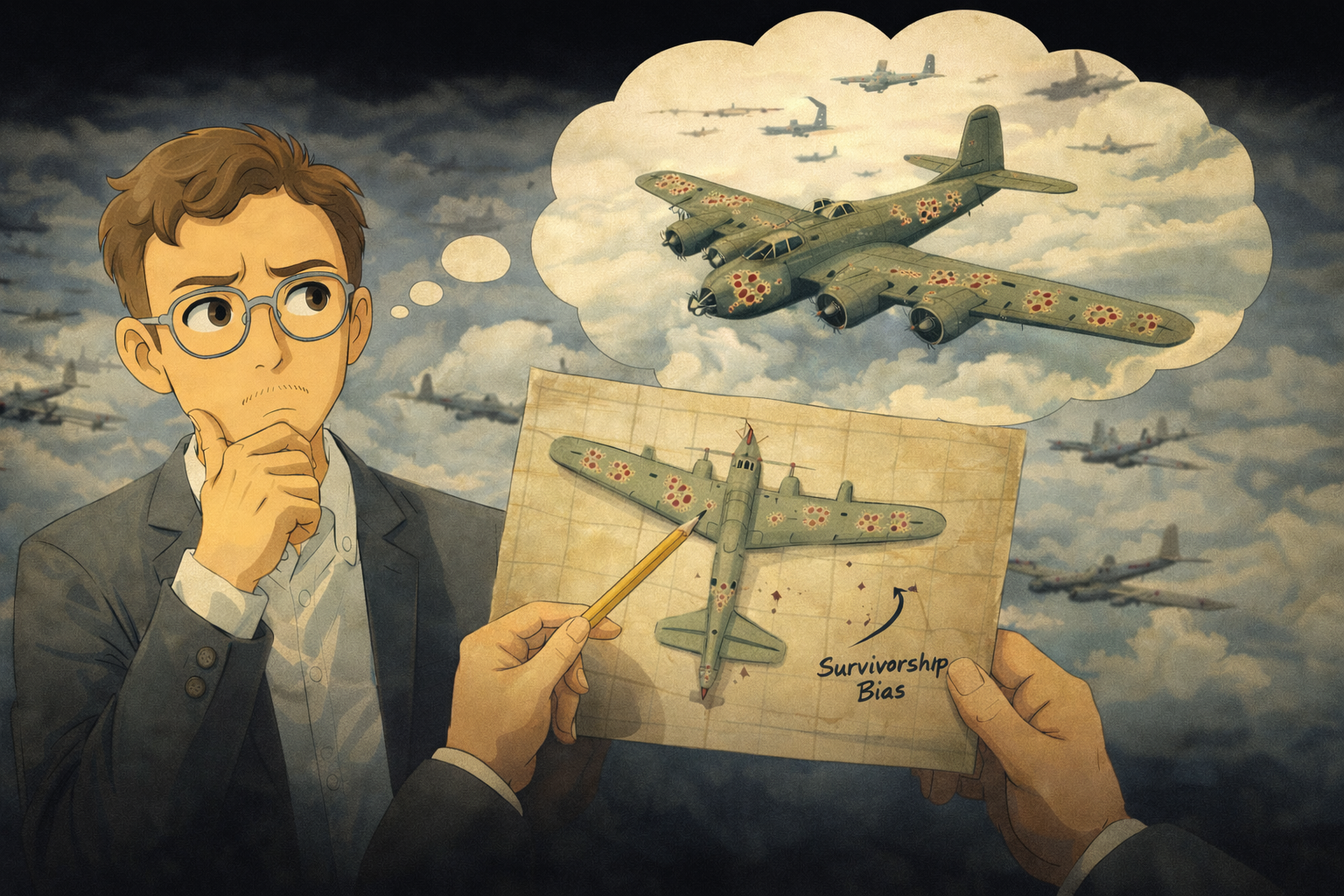
During World War II, the military studied bomber planes returning from missions. Engineers mapped every bullet hole they could find. Most damage appeared on the wings, fuselage, and tail.
The obvious conclusion was to reinforce those areas.
But a statistician disagreed.
The planes being analyzed were the ones that survived.
The missing data mattered more than the visible damage.
The areas without bullet holes were the areas where planes did not survive when hit. Those parts did not need less armor. They needed more.
This insight later became known as survivorship bias. It is the tendency to focus on what you can see while ignoring what is missing.
Survivorship Bias in Trading
In trading, the planes that return are:
- Losing trades you survived
- Setups that almost worked
- Trades that stopped you out before reversing
And the reaction is usually the same:
- Maybe my entry was wrong
- Maybe my stop was too tight
- Maybe I need one more filter
But here is the uncomfortable truth:
Not every loss contains a lesson.
Some losses are simply the cost of trading a system in a random market.
When you overanalyze every losing trade, you risk changing the wrong parts of your strategy. Just like reinforcing bullet holes on planes that already made it back.
Why Learning From Losses Is Often Overrated
This may sound strange, but it is important.
A loss does not automatically mean a mistake.
If you followed your rules, managed risk, and executed your setup, then the outcome does not matter.
Trying to fix a well executed losing trade often leads to:
- Strategy drift
- Loss of confidence
- Emotional decisions
You start changing your system to avoid pain, not to improve expectancy.
That is not learning. That is fear.
The Trades You Don’t See Matter Most
Just like the missing planes in WWII, the most important trades are often invisible:
- Trades you did not take because they were not in your plan
- Trades you skipped that later worked
- Trades that never gave a second chance
Your job is not to react to every result. Your job is to protect the core of your strategy, even when randomness makes it uncomfortable.
Process Over Outcome
This is something I keep reminding myself:
- I am not here to be right
- I am not here to overanalyze every trade
- I am here to execute my edge consistently
The moment you judge trades by outcome instead of execution, you lose control.
The market does not reward hindsight.
It rewards discipline.
“Anything can happen, and you don’t need to know what’s going to happen next in order to make money.”
— Mark Douglas {: .prompt-tip }
A Simple Rule I Try to Follow
This is my filter:
If I followed my rules, I do not change the system.
No tweaks.
No emotional reviews.
No overthinking.
I only consider changes when there is clear, repeated, statistical evidence. Never after a single loss.
Final Thoughts
The WWII plane teaches a lesson every trader needs to understand.
What you see is not always what matters.
Sometimes the smartest decision is to not learn from a loss. To accept randomness. To trust your process. To keep executing.
In trading, survival is not about fixing visible damage.
It is about protecting the parts that matter most, even when you do not see them get hit.
Thanks for reading High Conviction Swing Trading! Subscribe for free to receive new posts and support my work.