Portfolio Update: 25 Year Trading Experiment | April 2026
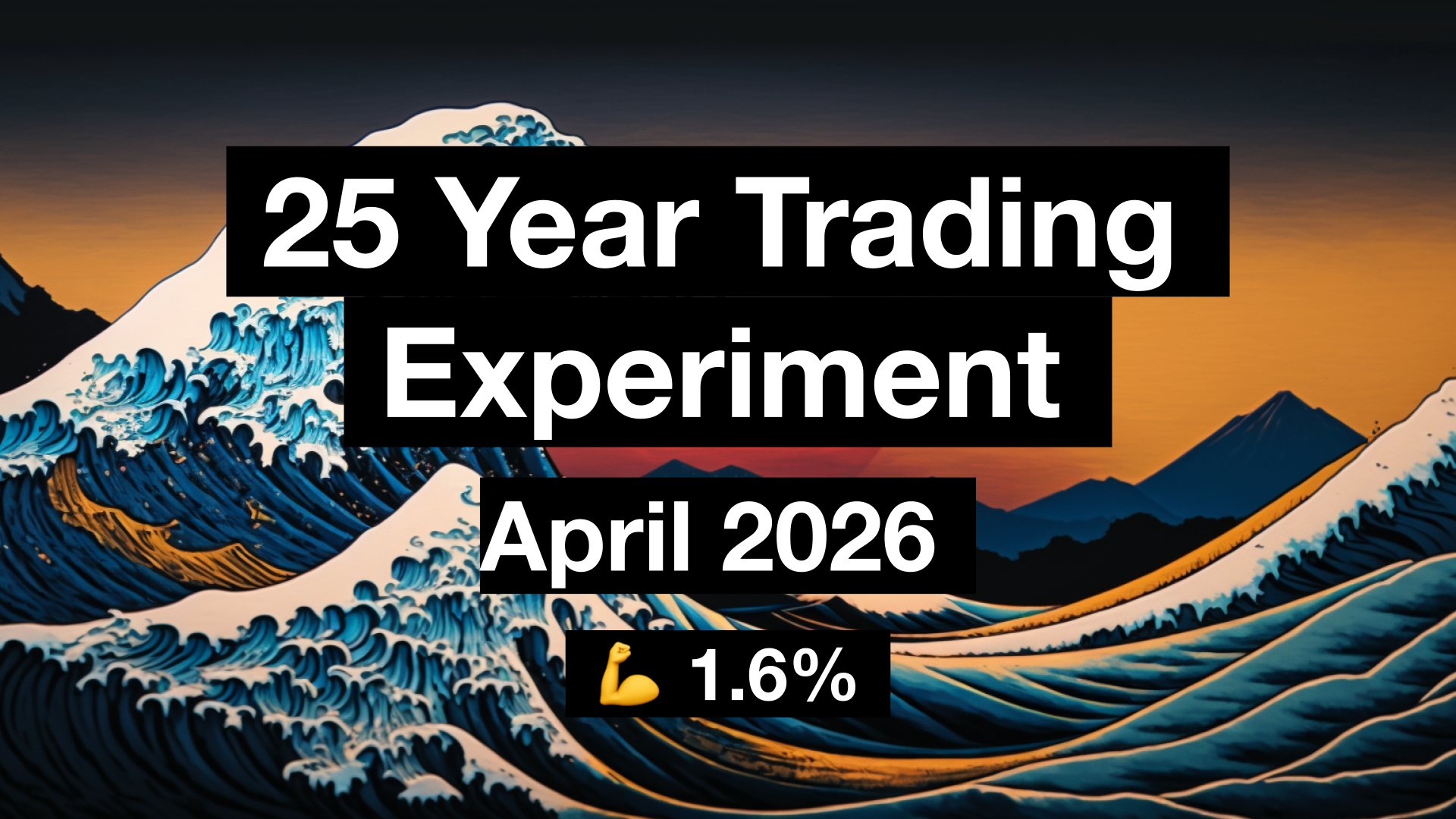
Month 15. After two difficult months where the active portfolio dipped to -1.4% from inception and the passive portfolio extended its lead, the actively traded portfolio is back ahead. A strong +13.1% month on the active side — the best single month since inception — has pushed the active portfolio back into the lead by 1.6 percentage points. Two new positions were opened in $NVO and $BABA, and the existing positions delivered. This is what staying disciplined through drawdowns looks like.
All trades are always shared live on X.com/tradergu, and the public trading dashboard is updated with the latest trade details and up-to-date portfolio allocations.
Performance: Inception to Date
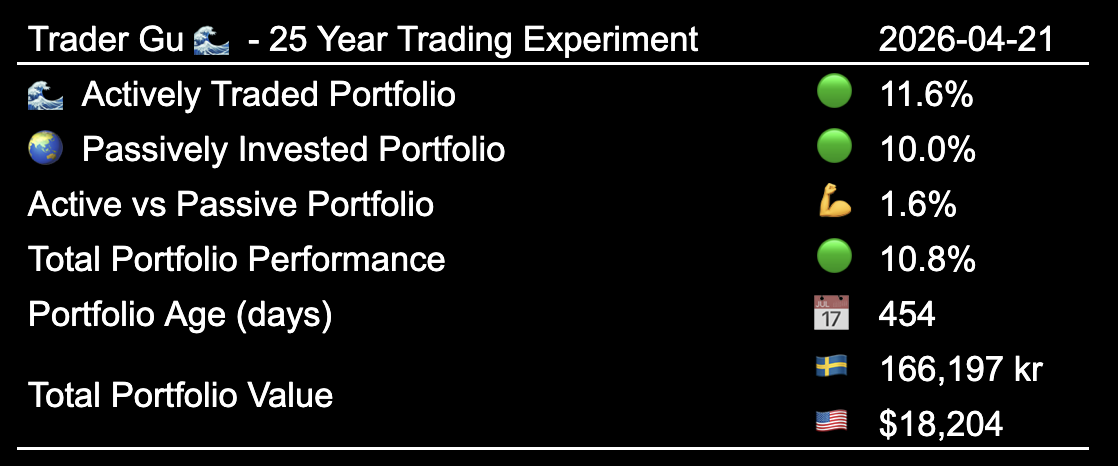
The total portfolio value is now worth $18,204 (166,197 kr). Both portfolios are in profit, and the actively traded portfolio has reclaimed the lead after two months of underperformance. Last month, the active side was at -1.4% — now it’s at +11.6%.
- Actively Traded Portfolio: 🟢 +11.6%
- Passively Invested Portfolio: 🟢 +10.0%
 Performance: Inception to Date
The goal is to outperform the global index over a 25 year period through disciplined active Swing Trading. {: .prompt-info }
Performance: Year to Date
The active portfolio has clawed back most of its early-2026 losses, now sitting at +0.4% year-to-date compared to the passive portfolio at +4.7%. The passive portfolio is still ahead on a YTD basis, but the gap has narrowed significantly from -10.7 percentage points in March down to -4.4 now.
- Actively Traded Portfolio: 🟢 +0.4%
- Passively Invested Portfolio: 🟢 +4.7%
 Performance: Year to Date
Performance: Month to Month Overview
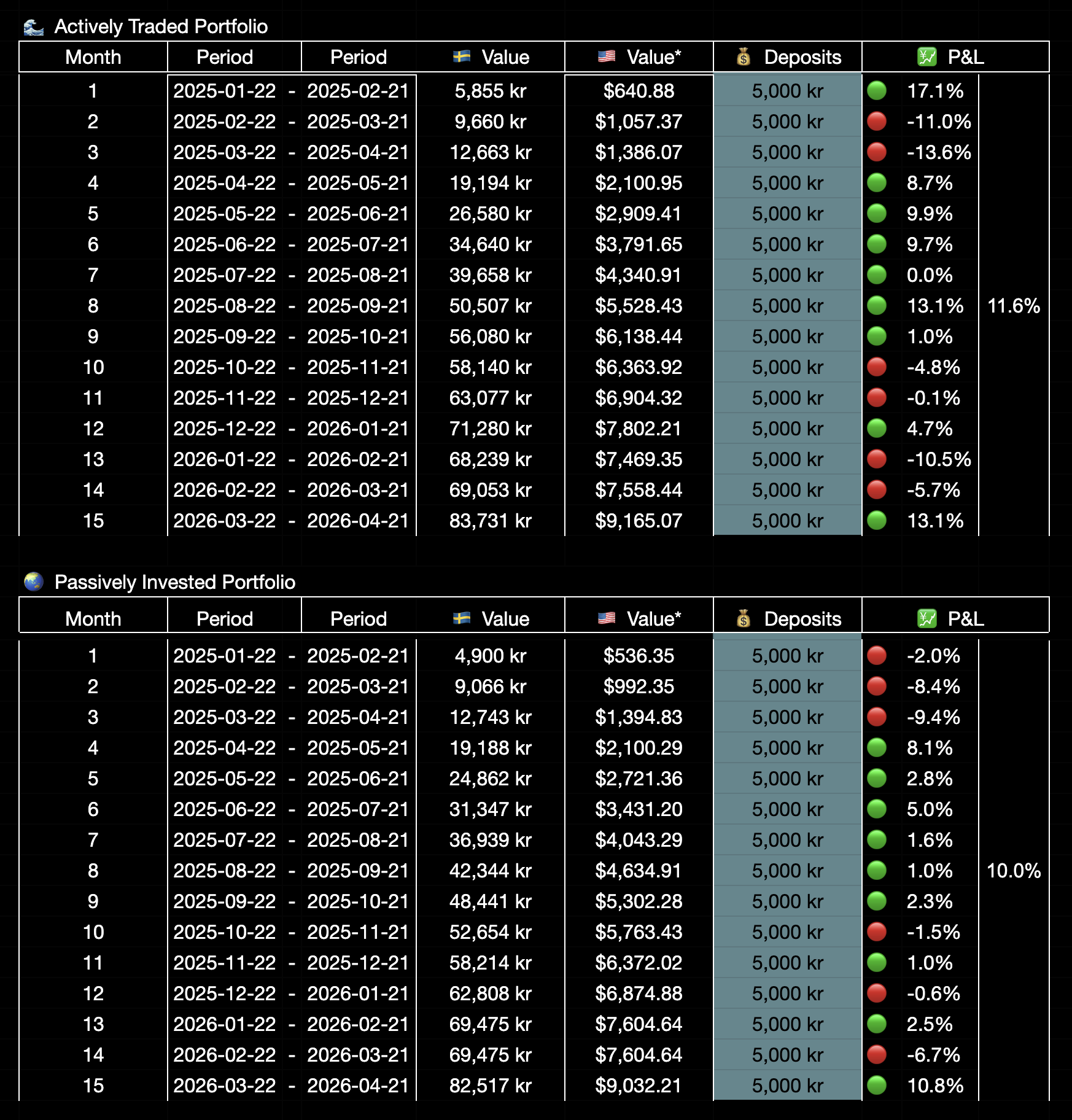
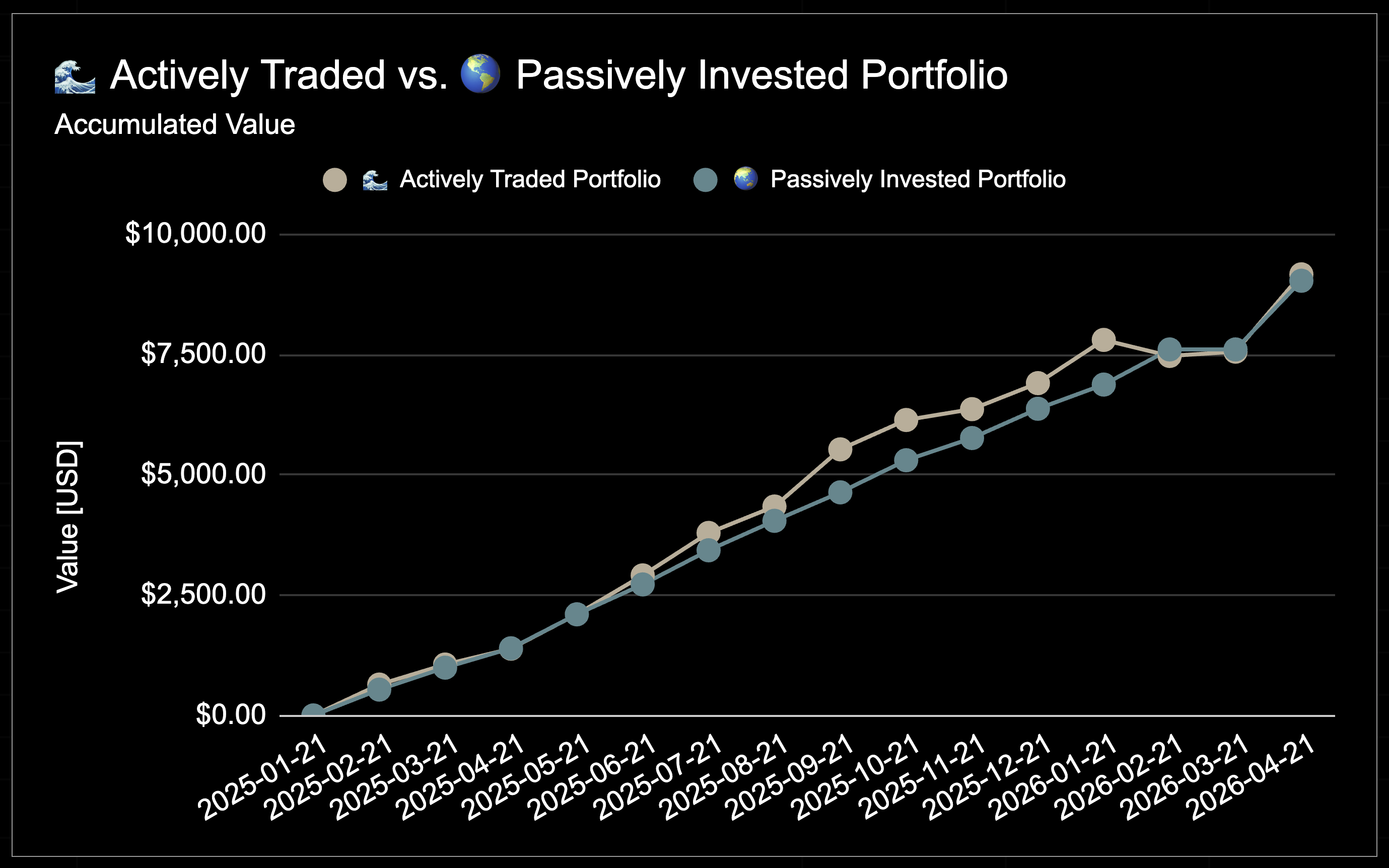
Month 15 was the strongest month since inception for the actively traded portfolio at +13.1%. This is a sharp reversal from the -10.5% in month 13 (February) and -5.7% in month 14 (March). The passive portfolio also had a solid month, continuing its steady compounding.
 Performance: Month by Month, Table
 Performance: Month by Month, Chart
Open Positions
The portfolio currently consists of seven open trades: $PYPL, $NOVO-B (x2), $JD, $NVO, $BRKR, and $BABA.
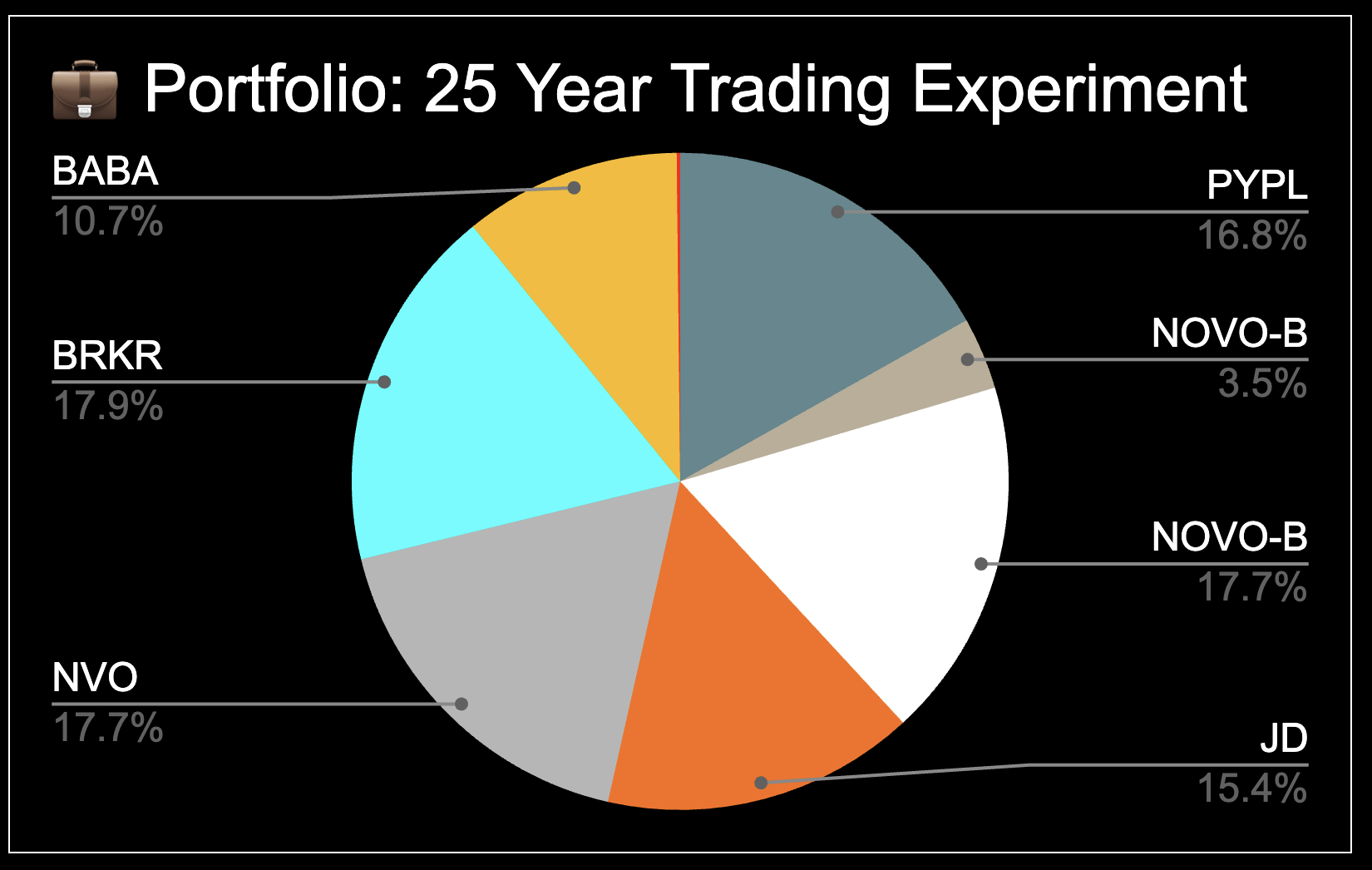 Open Positions
The total invested capital at risk is spread across all positions, with $NVO carrying the highest individual risk at around 6%.
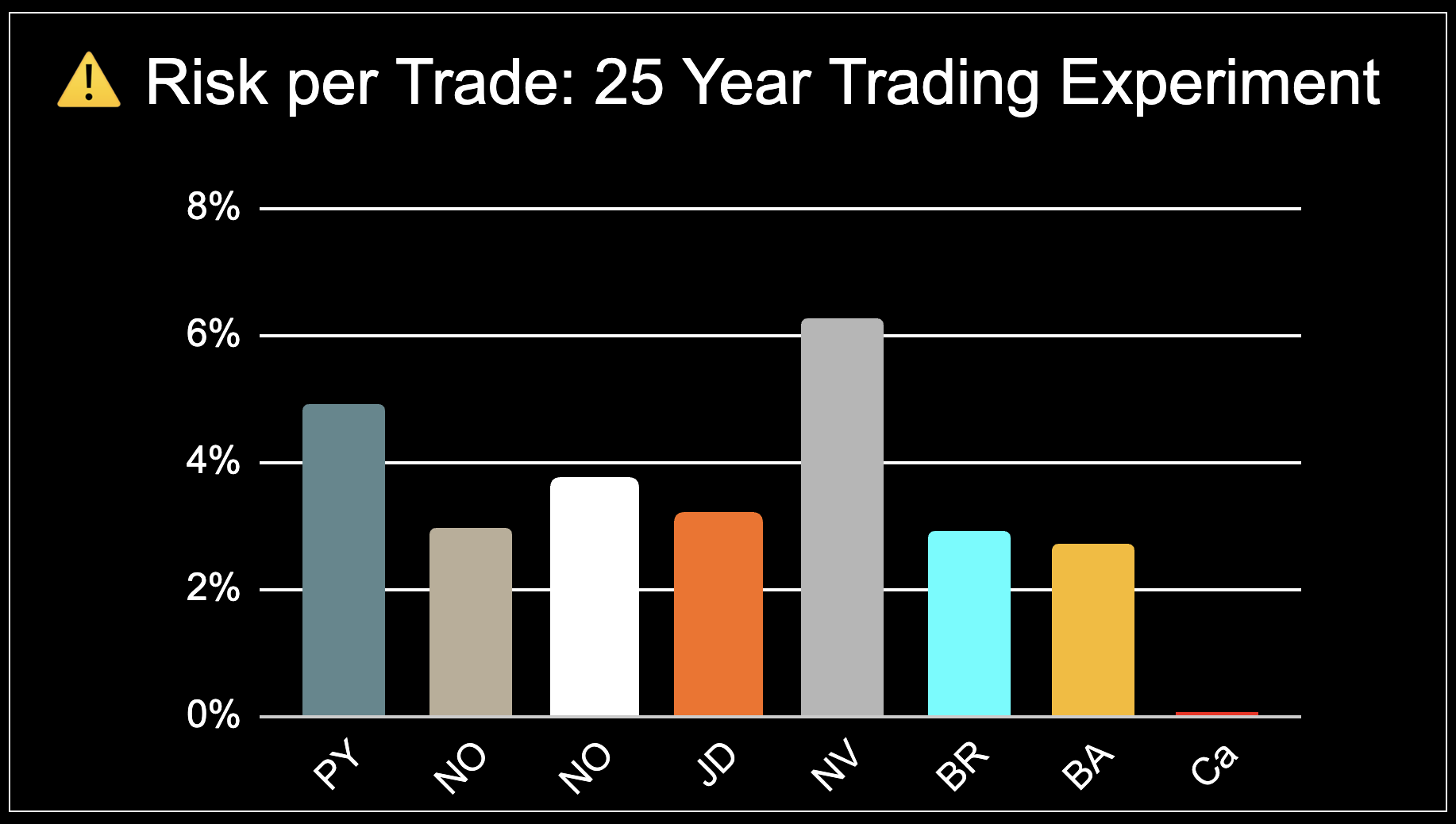 Risk per Trade
Open Positions: Detailed Overview
The following table contains the entry, stop loss, position size, and current market prices.
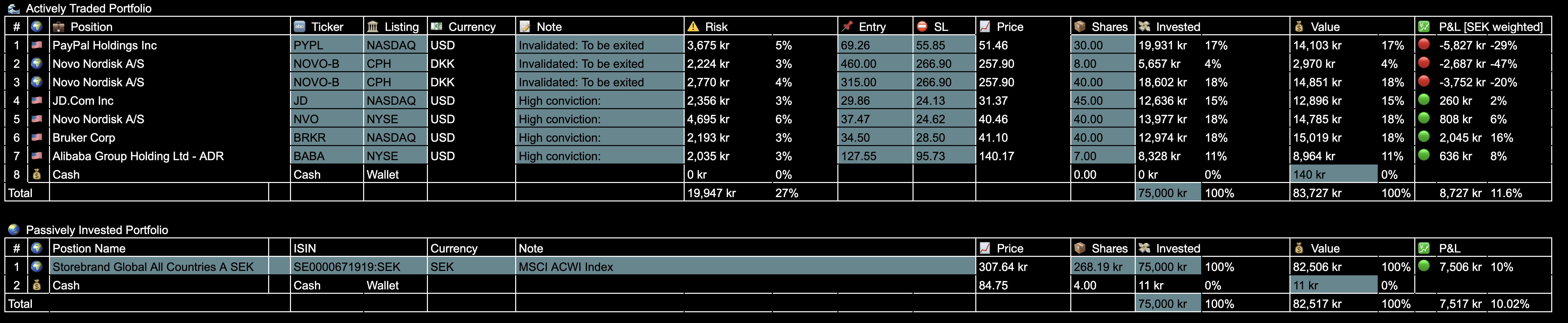 Open Trades: Details
Realized P&L & Win Rate
Since inception, I have realized 23 trades:
- 🟢 Winners
- 🔴 Losses
- 🟡 Break-even (+/- 3%)
- 🔵 Pending exit (invalidated or TP reached)
The win rate currently stands at 69% when excluding break-even trades, or 56% including them. Recent closes include $LULU at -14%, $CRSP at +1%, and several positions still pending exit.
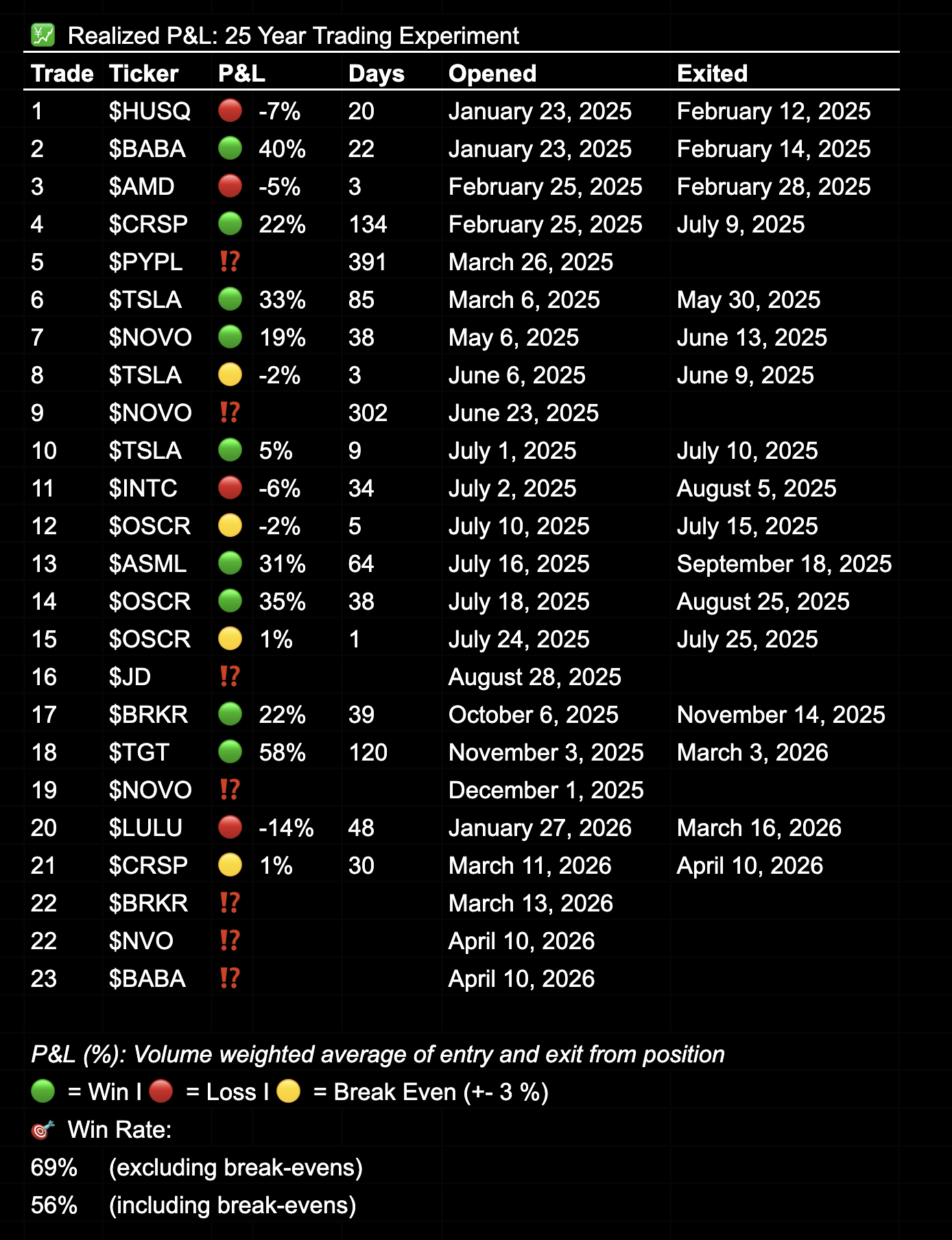 Realized P&L
25 Year Trading Experiment
For a full overview of the experiment’s purpose and structure, check out my 25 Year overview page, or watch the previously released YouTube introduction.
In short:
- 💰 10,000 SEK (~$1,000) invested monthly - split 50/50
- 🌊 Actively Traded vs 🌍 Passively Invested Global Index Fund
- 📅 Contributions on the 22nd of every month
- 🕰 Tracking my performance from 2025 to 2050
- 🌐 Transparency: Every trade shared publicly
Summary
Last month I wrote about the importance of exiting losers when the trade thesis is invalidated, and about staying disciplined even when the numbers are against you. This month is proof that the process works — if you let it. The active portfolio went from -1.4% inception-to-date to +11.6% in a single month.
That said, the passive portfolio is still ahead on a 2026 year-to-date basis. I’m not ignoring that. The gap has narrowed from -10.7 to -4.4 percentage points, and the active portfolio is back in the lead on an inception-to-date basis. But this experiment isn’t about any single month — it’s about 25 years of compounding discipline.
The portfolio is now 454 days old. Only about 8,700 more to go.
How are your portfolios performing this spring?
💬 Share your thoughts on X or Substack - I’m always interested in connecting with like-minded people.
High Conviction Swing Trading
Learn the full strategy
A structured swing trading course. Market structure, order blocks, position sizing, and trading psychology. Start Module 1 for free.
Start learning →